
24 Hip Hop Looks Black Women Dominated 2000s
The 2000s was a revolutionary era where Black women in hip hop didn’t just make music—they made fashion statements that still influence us today.
From oversized jerseys to velour tracksuits, these queens transformed street style into high fashion and created looks that defined an entire generation.
This article explores 24 Hip Hop Looks Black Women Dominated 2000s, taking you through the iconic moments when Missy Elliott, Lil’ Kim, Eve, Aaliyah, and countless other trailblazers proved that hip hop fashion was an art form.
Whether it was the bandana tops, the low-rise jeans, or the chunky jewelry that could stop traffic, these women owned every red carpet, music video, and street corner they graced.
Get ready to revisit the baggy cargo pants, the baby tees, the door-knocker earrings, and the confidence that made every outfit unforgettable.
This journey through Y2K hip hop fashion will remind you why these looks still matter and why we’re still trying to recreate them decades later.
1. The Oversized Jersey and Baggy Jeans Combo
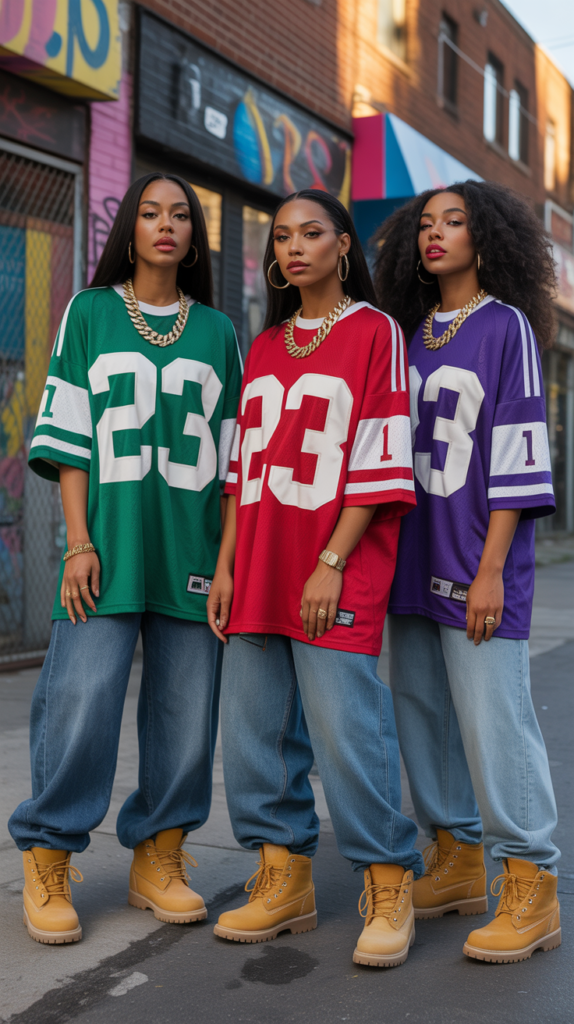
This look was the ultimate statement of comfort meeting confidence in early 2000s hip hop culture.
Black women rocked oversized sports jerseys paired with baggy jeans, creating a silhouette that challenged traditional feminine fashion rules while maintaining undeniable swagger.
Key Elements:
- The jerseys were typically several sizes too large, often falling to mid-thigh or below, creating a dress-like appearance that exuded effortless cool
- Baggy jeans sat low on the hips with extra fabric pooling at the ankles, usually covering sneakers almost completely
- Timberland boots or Air Force 1s were the footwear of choice, adding to the street-credible aesthetic
- Gold chains and hoop earrings provided the perfect accessories to elevate the casual look
- Artists like Aaliyah and Eve made this combination iconic in music videos and public appearances
- The look represented freedom from restrictive women’s fashion and embraced hip hop’s unisex approach to style
- Baseball caps worn backwards or tilted to the side completed the ensemble with authentic street attitude
2. Missy Elliott’s Inflatable Trash Bag Suit
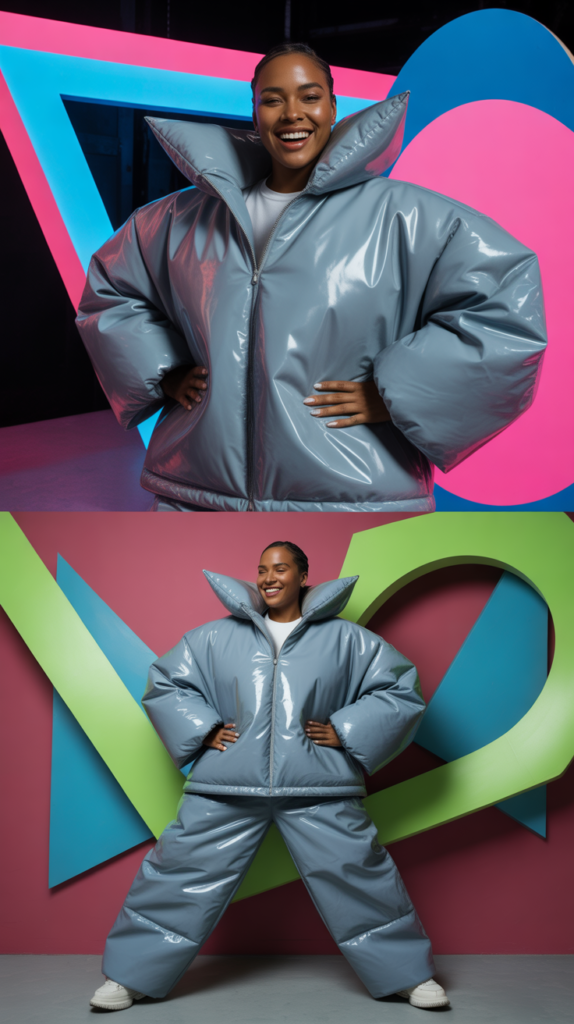
Missy Elliott redefined what hip hop fashion could be with her futuristic and boundary-pushing wardrobe choices.
Her inflatable patent leather suit from “The Rain (Supa Dupa Fly)” video became one of the most memorable fashion moments in music history.
Revolutionary Aspects:
- The oversized inflatable black suit challenged every conventional notion of what female rappers should wear in videos
- Patent leather material gave the outfit a futuristic, almost sci-fi quality that was unprecedented in hip hop
- Missy proved that women in hip hop didn’t need to be hypersexualized to command attention and respect
- The look inspired countless Halloween costumes and remains instantly recognizable decades later
- Her fearless approach to fashion opened doors for more experimental and artistic expression in hip hop style
- The outfit became a symbol of creativity, individuality, and the rejection of industry pressure to conform
- Behind-the-scenes stories reveal the suit was actually a garbage bag creation by stylist June Ambrose that became legendary
3. Lil’ Kim’s Designer Monogram Everything
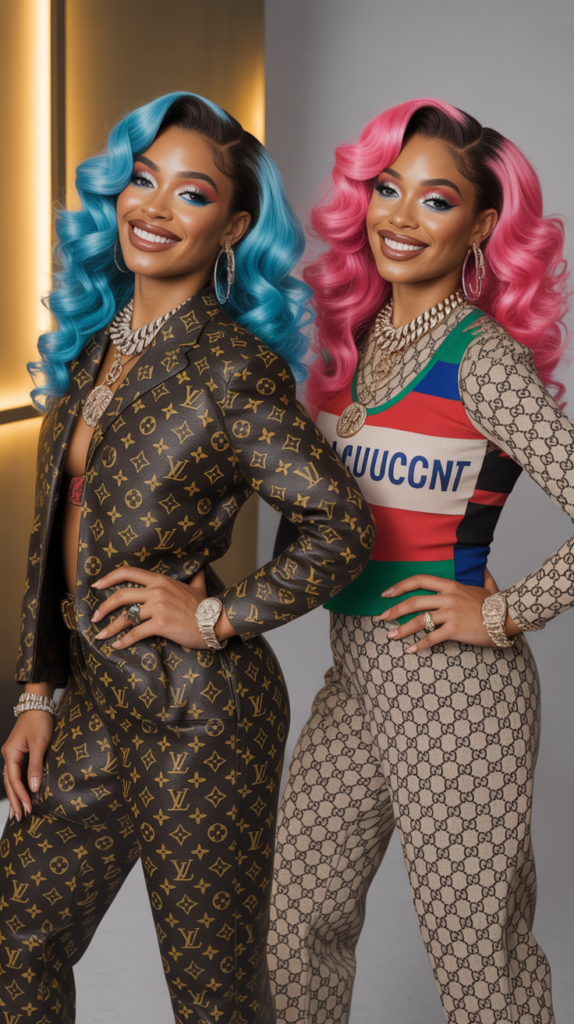
Lil’ Kim elevated hip hop fashion by bringing high-end designer pieces into mainstream consciousness.
Her obsession with monogrammed luxury items made designer logos a status symbol in the hip hop community.
Signature Style Elements:
- Louis Vuitton, Gucci, and Fendi monogram prints covered everything from jackets to boots to handbags
- Custom-made designer pieces featured her name or initials incorporated into the brand patterns
- She mixed high fashion with street style, wearing designer coats over lingerie-inspired tops
- Colorful wigs and dramatic makeup coordinated with her designer-heavy outfits
- Her MTV Video Music Awards appearances showcased increasingly daring designer looks that sparked conversations
- The “Queen Bee” made it clear that hip hop artists deserved front-row seats at fashion shows
- Her influence convinced luxury brands to embrace hip hop culture rather than distance themselves from it
4. The Velour Tracksuit Phenomenon
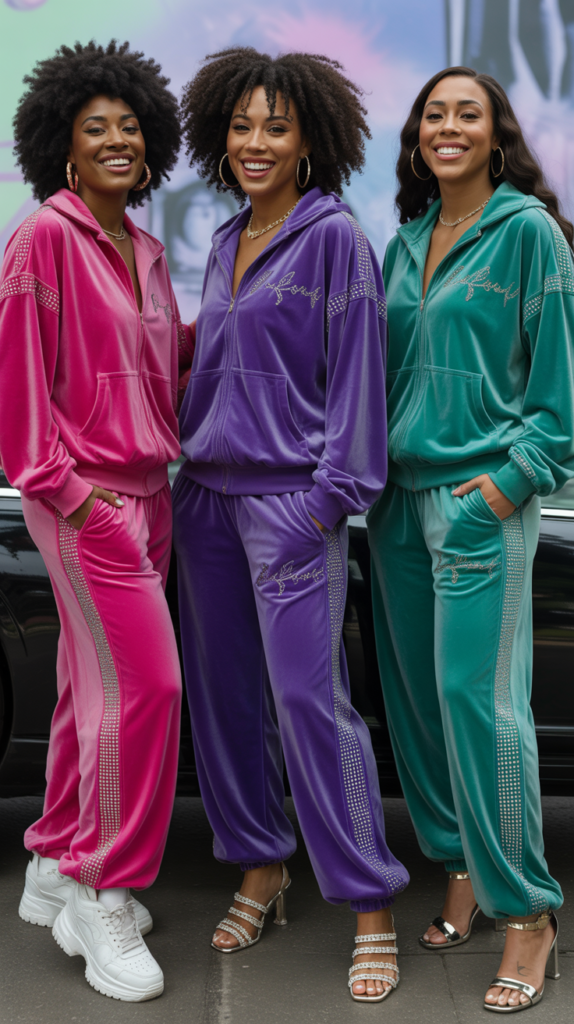
The velour tracksuit became synonymous with 2000s hip hop luxury and casual elegance.
Black women in hip hop made matching velour sets from brands like Juicy Couture and Baby Phat the ultimate statement of comfortable glamour.
Defining Features:
- Matching zip-up hoodies and pants in vibrant colors like pink, baby blue, and burgundy dominated the scene
- Juicy Couture’s rhinestone logo on the backside became an iconic detail that everyone wanted
- Baby Phat by Kimora Lee Simmons offered urban alternatives with cat logos and more diverse sizing
- The suits were worn with stiletto heels or fresh sneakers depending on the occasion
- Celebrities were photographed wearing them everywhere from airports to award show after-parties
- The tracksuit represented accessible luxury that fans could actually purchase and emulate
- This trend bridged the gap between athletic wear and high fashion, creating the athleisure movement
5. Aaliyah’s Tomboy Chic Aesthetic
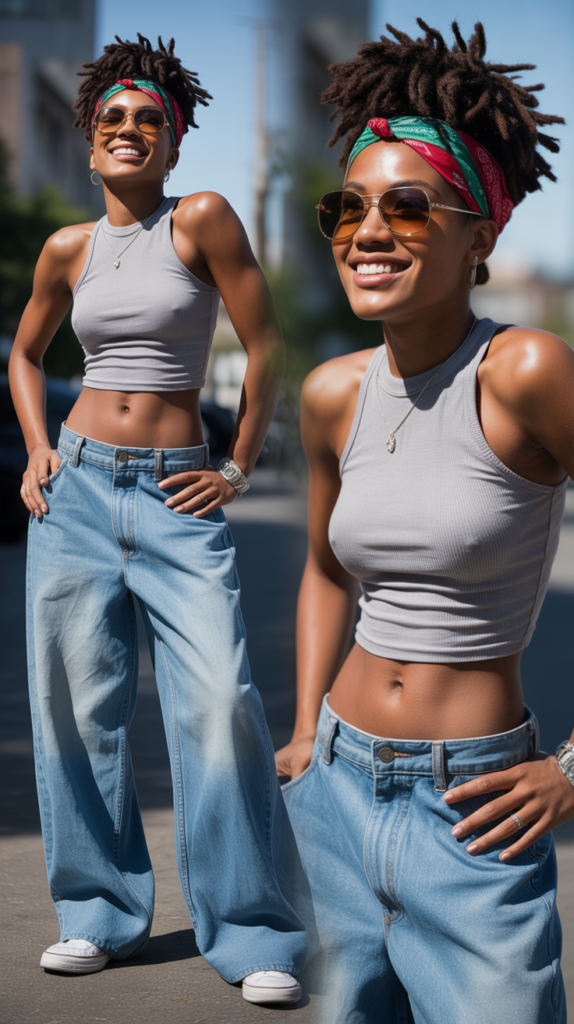
Aaliyah revolutionized feminine hip hop fashion by embracing traditionally masculine pieces with her own unique flair.
Her tomboy style influenced an entire generation of young Black women to dress for themselves rather than male approval.
Iconic Components:
- Baggy Tommy Hilfiger and Karl Kani jeans paired with cropped tops or sports bras created a balanced silhouette
- One eye covered by hair became her signature look that fans still recreate today
- Bandanas tied around her head or worn as tops added street credibility to her polished image
- Black sunglasses and chokers were constant accessories that completed her mysterious aesthetic
- She mixed high-end pieces with affordable streetwear, making her style accessible yet aspirational
- Aaliyah’s posthumous influence on fashion continues with multiple tribute collections and style homages
- Her ability to be sexy without revealing everything taught young women about the power of suggestion and confidence
6. The Bandana Top Revolution
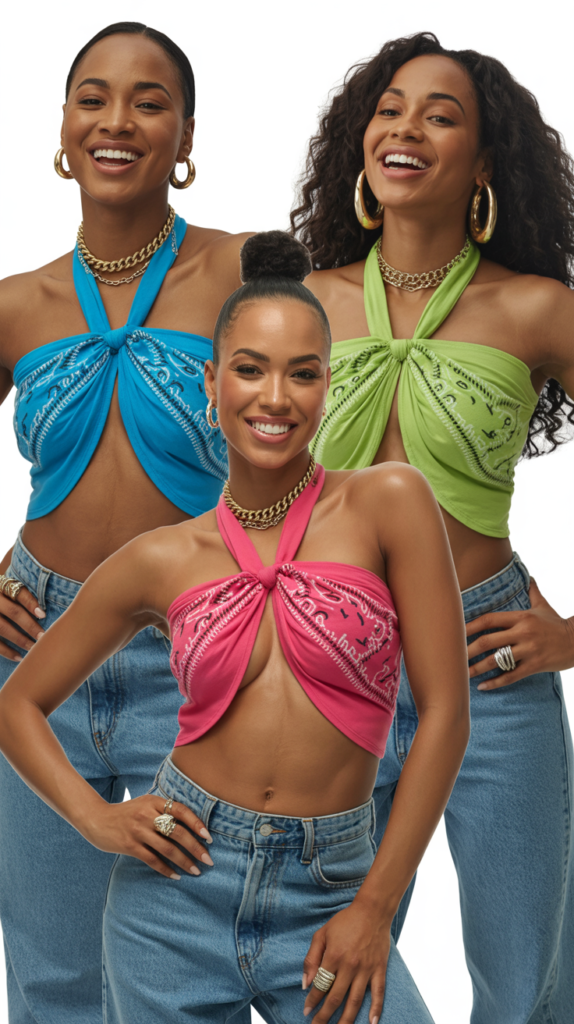
Bandana tops became a defining garment of 2000s hip hop fashion for Black women. This daring piece transformed a simple accessory into a statement crop top that embodied confidence and body positivity.
Style Breakdown:
- Standard bandanas were folded and tied behind the neck and back, creating a triangle-shaped halter top
- The look exposed the midriff and emphasized the shoulders and arms, requiring confidence to pull off
- Celebrities like Ashanti and Beyoncé made bandana tops red carpet appropriate by pairing them with designer skirts
- Different colors and patterns allowed for personal expression while maintaining the iconic silhouette
- The minimalist top was often paired with maximalist accessories like chunky belts and layered chains
- This trend represented body confidence and the celebration of curves in hip hop culture
- Fashion critics initially dismissed the look as too provocative, but it became a symbol of women controlling their own image
7. Door-Knocker and Bamboo Earrings
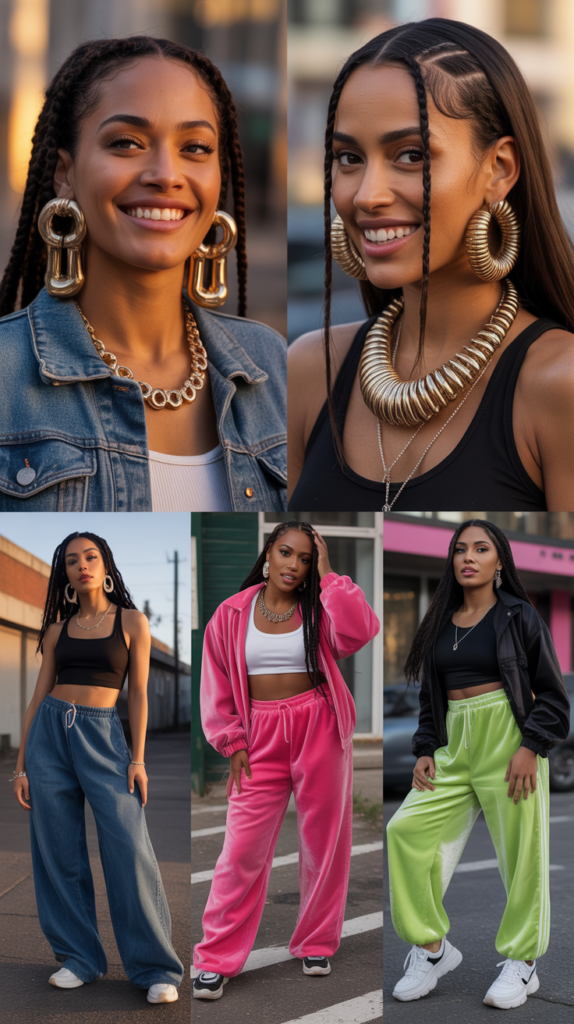
These oversized earrings became the ultimate hip hop jewelry statement for Black women in the 2000s. The bigger and bolder the earrings, the more authentic your hip hop credentials appeared to be.
Cultural Significance:
- Door-knocker earrings featured large circular or geometric designs, often with names spelled out in the center
- Bamboo earrings represented a connection to 1980s hip hop while being reimagined for the 2000s aesthetic
- Gold or gold-plated versions were preferred, with some featuring diamonds or rhinestone embellishments
- The earrings made a statement about cultural pride and connection to hip hop’s roots
- Celebrities like Mary J. Blige and Alicia Keys brought these styles to mainstream award shows
- The trend represented affordable luxury that working-class Black women could actually afford and enjoy
- These earrings became so iconic that LL Cool J referenced them in his song “Around the Way Girl”
8. Baby Phat’s Urban Princess Aesthetic
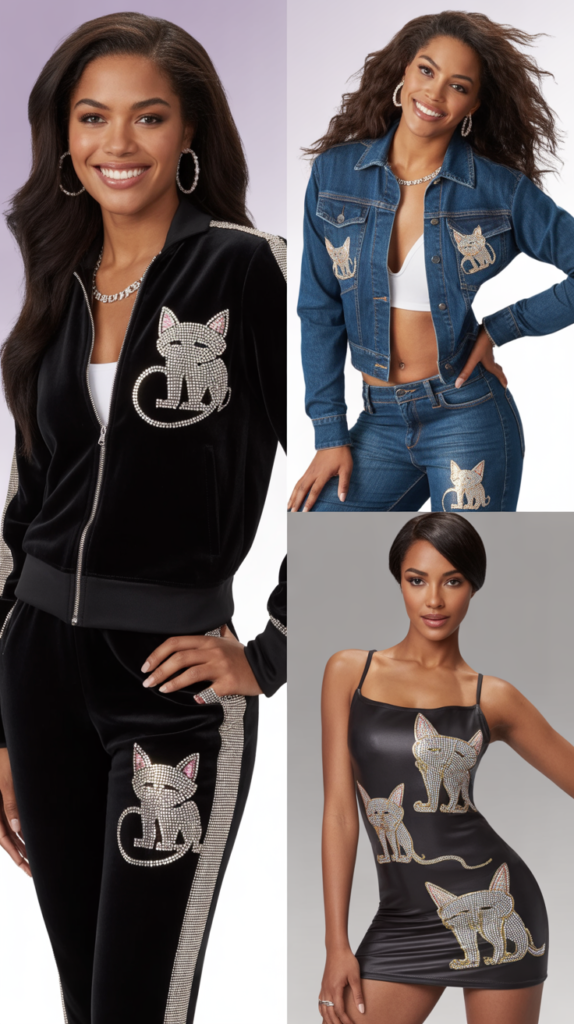
Kimora Lee Simmons created Baby Phat as a fashion line that specifically celebrated Black and Asian women’s bodies and style preferences.
The brand became a cornerstone of 2000s hip hop fashion for women who wanted to feel both street and sophisticated.
Brand Identity:
- Form-fitting jeans with embroidered cat logos on the pockets celebrated curves rather than hiding them
- Rhinestone-embellished everything from jackets to purses added glamour to streetwear basics
- The pink and black color scheme became instantly recognizable in hip hop fashion circles
- Baby Phat fashion shows featured diverse models and celebrated body positivity before it was mainstream
- The brand created affordable luxury that middle-class Black women could access without breaking the bank
- Kimora herself became a fashion icon, showing that designers could be just as influential as the artists wearing their clothes
- Baby Phat represented female entrepreneurship and ownership within the male-dominated hip hop industry
9. The Low-Rise Jean Era
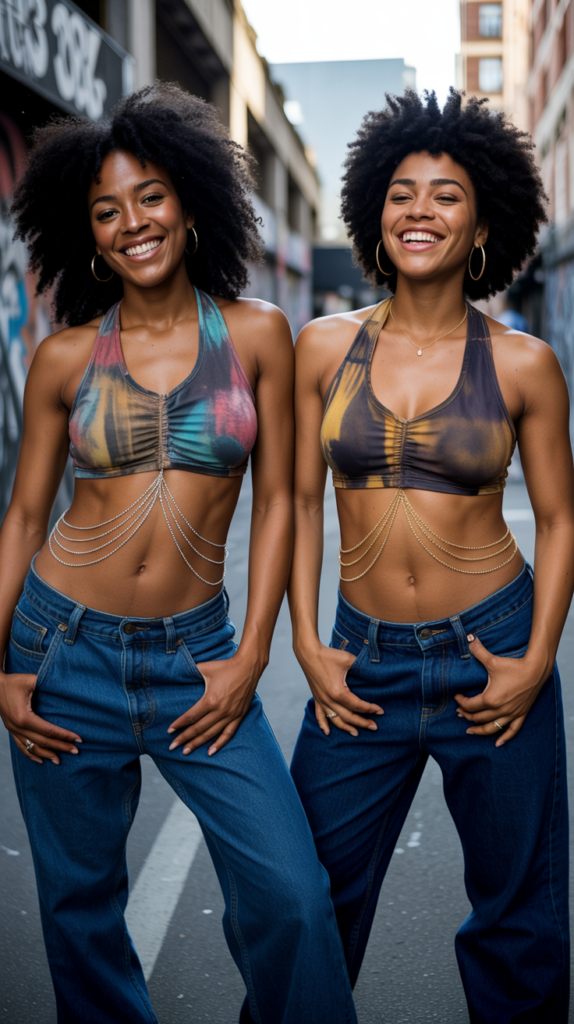
Low-rise jeans defined the 2000s silhouette for Black women in hip hop fashion. These pants sat several inches below the natural waistline, creating a look that was both daring and definitive of the era.
Trend Details:
- Jeans sat on the hips rather than the waist, often revealing decorated thongs or jeweled belly chains
- Brands like Apple Bottoms specifically designed low-rise jeans to flatter curves and fuller figures
- The look required confidence and body awareness, as movement could reveal more than intended
- Wide leg or flare styles balanced the low-rise cut, creating an elongated leg silhouette
- Crop tops and belly shirts were the natural pairing, as regular-length tops would look disproportionate
- Criticism about the trend being too revealing was countered by arguments about body autonomy and choice
- The style has recently made a comeback, proving that 2000s hip hop fashion continues to influence modern trends
10. Eve’s Paw Print and Feminine-Tough Balance
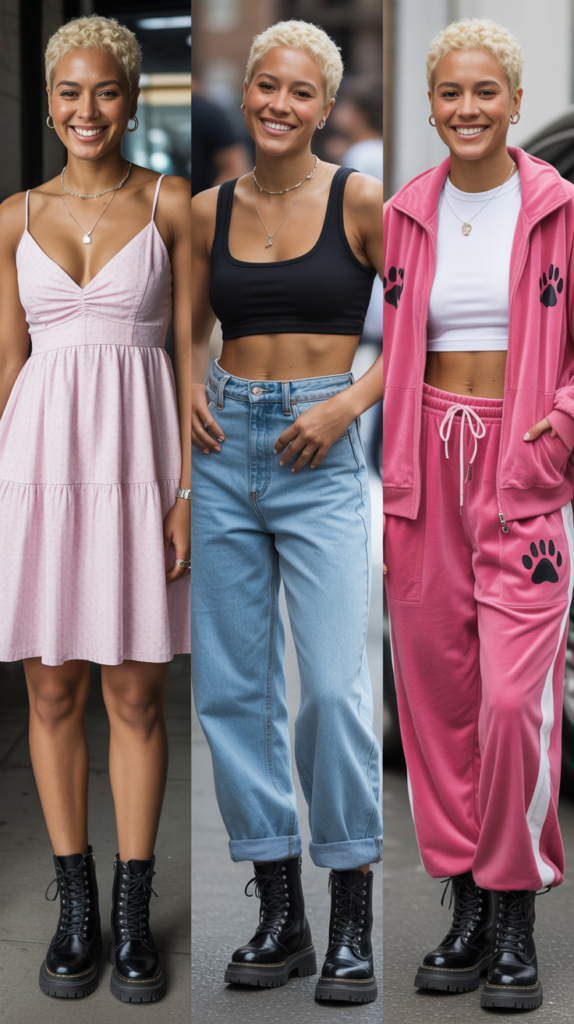
Eve brought a unique balance of femininity and toughness to hip hop fashion.
Her signature paw print tattoos and ability to mix delicate pieces with street staples created a blueprint for female rappers to embrace complexity.
Style Signature:
- Paw print tattoos on her chest became her trademark and inspired countless fan imitations
- She paired fitted dresses with combat boots, showing that femininity and toughness weren’t mutually exclusive
- Blonde short haircuts or bold color choices challenged beauty standards while maintaining sex appeal
- Eve’s Fetish clothing line offered women hip hop fashion that was both edgy and wearable
- She wore designer gowns to award shows but kept her street credibility with accessible styling choices
- Her Ruff Ryders affiliation showed she could hang with the boys while maintaining her distinct female perspective
- Eve proved that female rappers didn’t need to choose between being pretty or being tough—they could be both
11. Chunky Platinum Chains and Grills
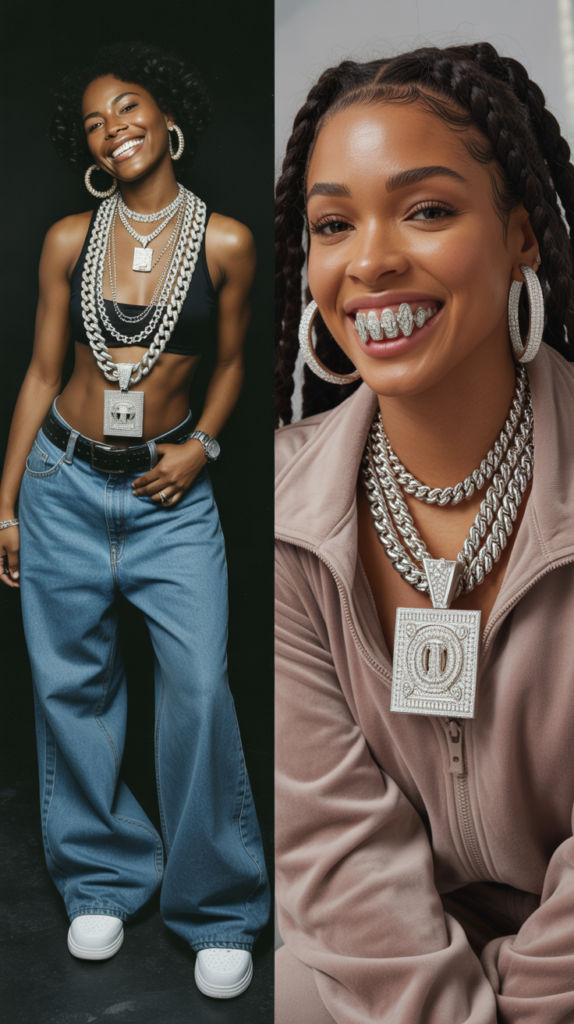
Jewelry wasn’t just accessorizing in 2000s hip hop—it was about displaying success and status.
Black women in hip hop wore chunky platinum chains and even experimented with decorative grills to match their male counterparts.
Jewelry Evolution:
- Platinum replaced gold as the metal of choice, signifying next-level success and wealth
- Chains featuring dollar signs, nameplates, or custom pendants told personal stories and represented achievements
- Some female artists wore chains that rivaled male rappers in size and expense, challenging gendered expectations
- Decorative grills—removable tooth covers featuring diamonds or designs—became fashion statements rather than permanent modifications
- Layering multiple chains of different lengths created depth and visual interest in music videos and photos
- The jewelry represented self-made success and the economic empowerment of women in hip hop
- Female artists wearing expensive jewelry challenged stereotypes that women’s worth came from male partners rather than their own accomplishments
12. Colorful Hair Extensions and Weaves
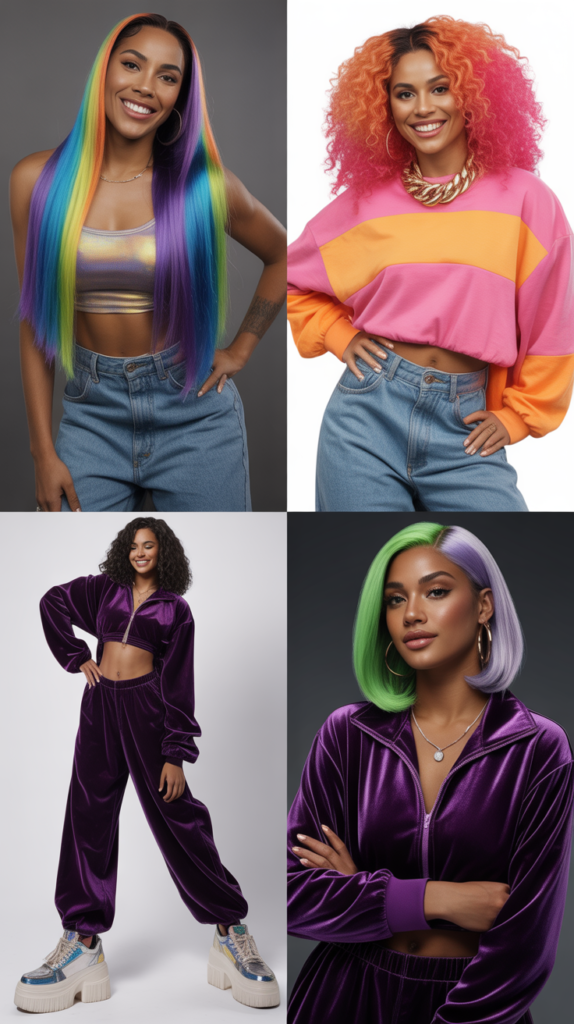
Hair became a canvas for creative expression in 2000s hip hop fashion. Black women embraced colorful weaves, extensions, and wigs that ranged from subtle highlights to full rainbow transformations.
Hair Innovation:
- Lil’ Kim’s wigs in every color from pink to blue to green showed that hair could change daily to match outfits
- Long, straight weaves contrasted with natural textures, offering versatility and protective styling options
- Streaks of blonde, red, or unconventional colors like purple added dimension without full commitment
- Braided extensions with colored synthetic hair created intricate patterns and designs
- The styling choices represented freedom from Eurocentric beauty standards while embracing creative expression
- Hair became another way to signal affiliation with hip hop culture and stay ahead of trends
- The investment in elaborate hairstyles showed dedication to the complete aesthetic package
13. The Baby Tee Movement
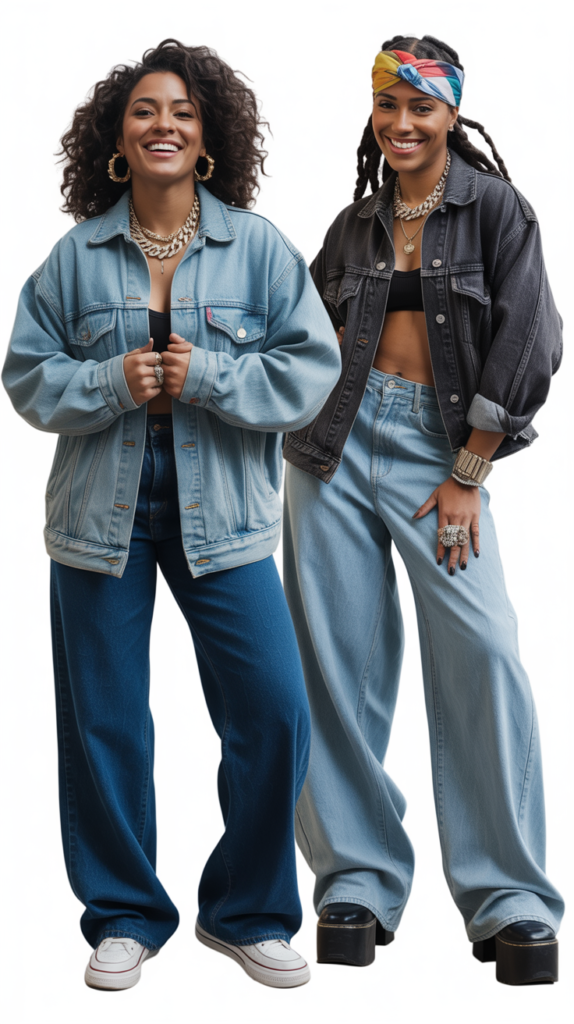
Baby tees—fitted, short t-shirts that ended above the waistline—became essential wardrobe items for Black women in hip hop.
These shirts were the perfect complement to low-rise jeans and showcased confidence in body and style.
Style Characteristics:
- The shirts were intentionally smaller than standard sizes, creating a fitted look that emphasized curves
- Graphic designs featuring hip hop lyrics, brand logos, or statements made each tee unique and personal
- Contrasting colors between the tee and bottoms created visual interest and highlighted the midriff
- Layering baby tees over long-sleeve shirts added dimension and allowed for year-round wear
- The look was accessible and affordable, allowing fans to easily recreate celebrity styles
- Baby tees with rhinestone embellishments or printed photos added glamour to the casual garment
- This trend democratized hip hop fashion by offering style that didn’t require designer prices
14. Remy Ma’s Bronx Bomber Aesthetic
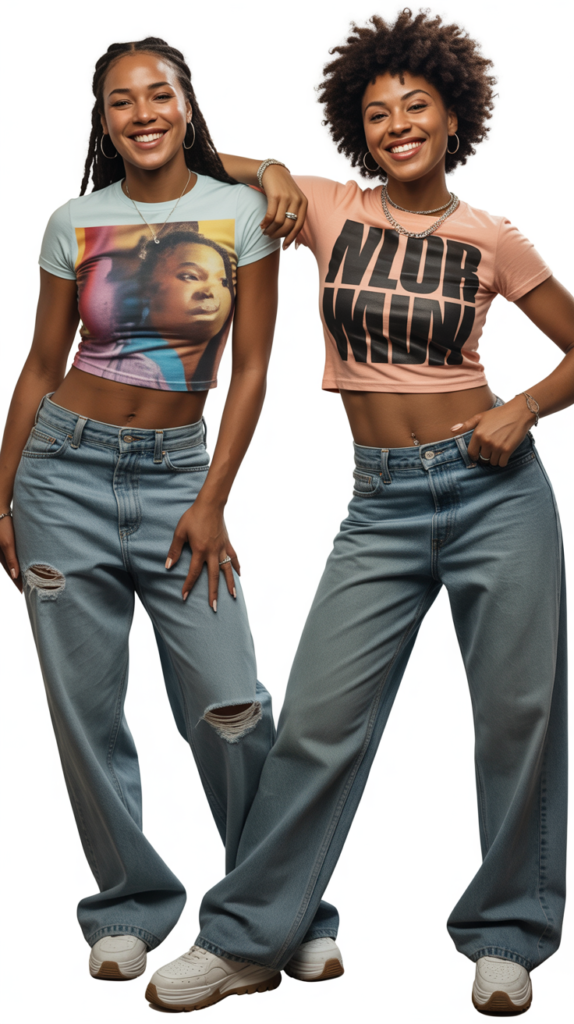
Remy Ma brought authentic Bronx street style to mainstream hip hop fashion.
Her no-nonsense approach to fashion emphasized functionality, street credibility, and staying true to her roots while achieving success.
Signature Elements:
- Timberland boots in multiple colors remained constant whether she was performing or walking red carpets
- Yankees fitted caps represented both hometown pride and the universal language of hip hop
- Oversized leather jackets and puffer coats nodded to New York winter practicality and street style
- Gold jewelry was statement-making but never over-the-top, maintaining authenticity over excess
- Form-fitting jeans and pants showed her curves while maintaining the comfort needed for performance
- Her refusal to change her style for mainstream acceptance made her a role model for authenticity
- Remy Ma proved that staying true to your neighborhood aesthetic could coexist with commercial success
15. The Cargo Pants Takeover
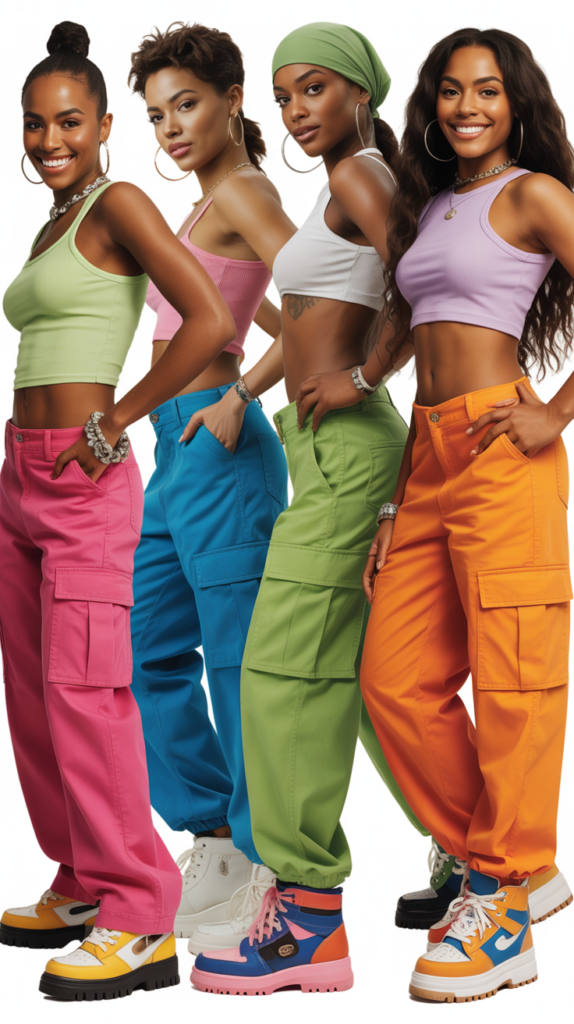
Cargo pants became a unisex staple that Black women in hip hop adopted and made distinctly feminine.
The multiple pockets and relaxed fit offered practicality while maintaining the baggy aesthetic that defined the era.
Practical Fashion:
- Numerous pockets provided actual functionality, allowing women to carry essentials without purses
- Colors ranged from traditional khaki and olive to bright pink and baby blue versions
- Pairing with fitted or cropped tops balanced the baggy bottom silhouette
- The pants could be dressed up with heels and jewelry or kept casual with sneakers
- Drawstring waists and adjustable features made them comfortable for long days and performances
- Brands like JNCO and Kikwear offered versions with increasingly wide legs and excessive pockets
- The style represented rejection of restrictive women’s fashion in favor of comfort and mobility
16. Trina’s Miami Bass Fashion
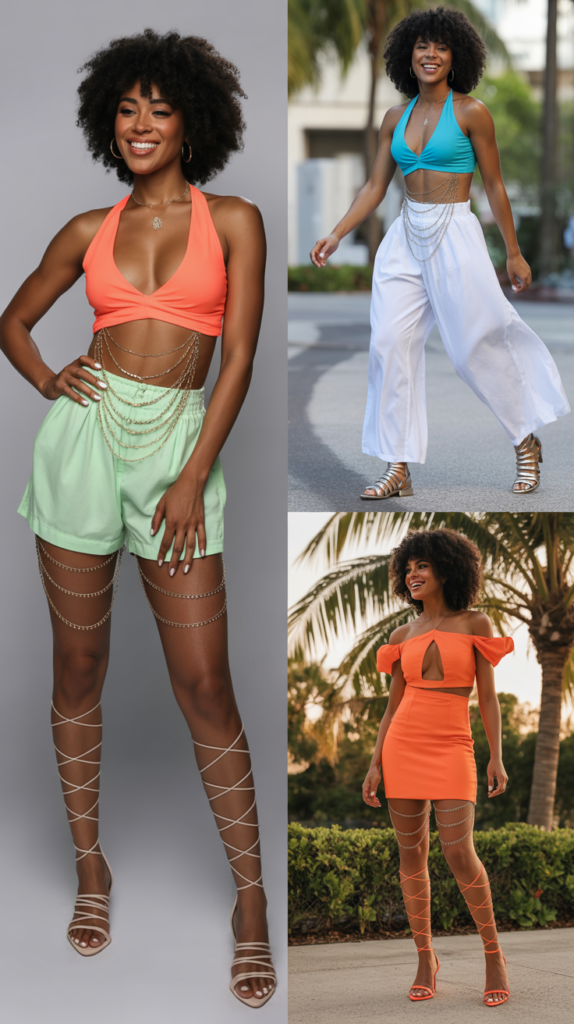
Trina brought Miami’s unique flavor to hip hop fashion with her emphasis on minimal clothing, maximum confidence, and tropical vibrancy.
Her style celebrated the body and warmth of Southern hip hop culture.
Miami Influence:
- Barely-there outfits featuring bikini tops, short shorts, and body chains reflected Miami’s beach culture
- Bright colors like hot pink, lime green, and electric blue captured the tropical environment
- Strappy heels and sandals were preferred over sneakers, maintaining femininity and showing off pedicured feet
- Body jewelry including belly chains, ankle bracelets, and toe rings added shine without heavy pieces
- Her confidence in revealing clothing inspired debates about female sexuality and artistic expression in hip hop
- Trina’s style acknowledged that different regions of hip hop had distinct fashion identities
- The Miami aesthetic proved that Black women in hip hop didn’t need to follow New York or LA trends exclusively
17. The Denim-on-Denim Look
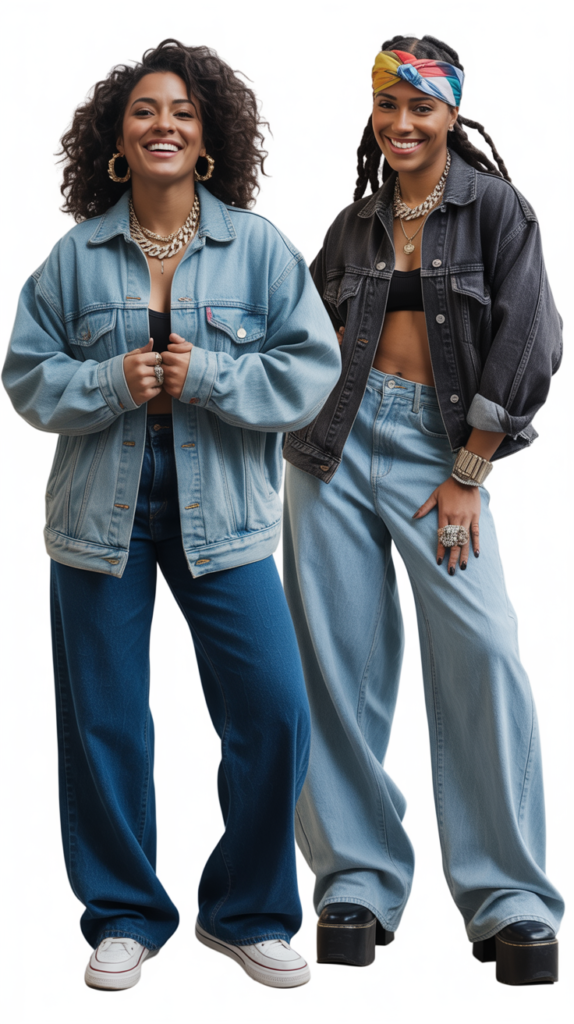
Wearing denim jackets with denim jeans—the notorious “Canadian tuxedo”—became an unexpected hip hop fashion statement.
Black women made this potentially risky combination work through careful styling and confidence.
Making It Work:
- Contrasting washes prevented the outfit from looking like a uniform, mixing light tops with dark bottoms or vice versa
- Embellishments on either the jacket or jeans added visual interest and broke up the denim monotony
- Strategic accessories like colorful belts, vibrant shoes, or statement jewelry drew attention away from the denim-heavy outfit
- Fitted denim on top with baggy jeans below (or reverse) created silhouette variety
- Designer denim brands like True Religion and Seven Jeans elevated the look beyond basic department store options
- The style was simultaneously ridiculed and embraced, with those who wore it confidently making it iconic
- Music videos featuring denim-on-denim looks helped legitimize what was once considered a fashion faux pas
18. Da Brat’s Tomboy Swagger
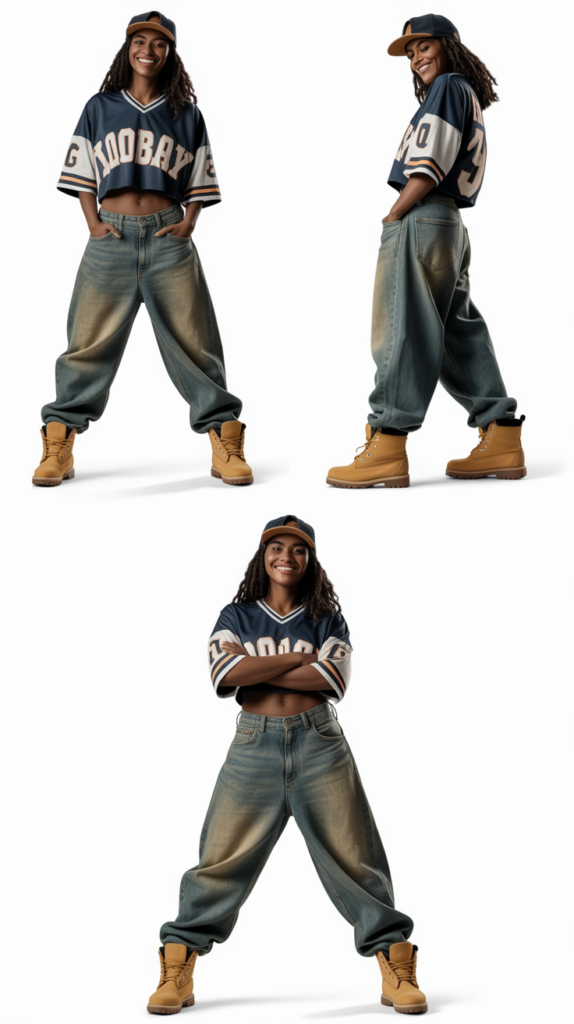
Da Brat pioneered the full tomboy aesthetic in women’s hip hop fashion years before it became widely accepted.
Her masculine-leaning style challenged what female rappers were expected to wear and opened doors for gender expression in hip hop.
Groundbreaking Style:
- Oversized sports jerseys, baggy jeans, and baseball caps composed her everyday uniform
- She wore her braids in styles typically associated with men, refusing to soften her look for commercial appeal
- Timberland boots and Air Jordans were her footwear choices, completely rejecting heels and feminine shoes
- Minimal makeup and jewelry kept the focus on her skills rather than her appearance
- Da Brat’s success proved that female rappers didn’t need to be conventionally feminine or sexualized to sell records
- Her style gave permission to young Black women who didn’t identify with hyperfeminine aesthetics to enter hip hop
- The representation she provided expanded the definition of Black womanhood within hip hop culture
19. The Trucker Hat Phenomenon
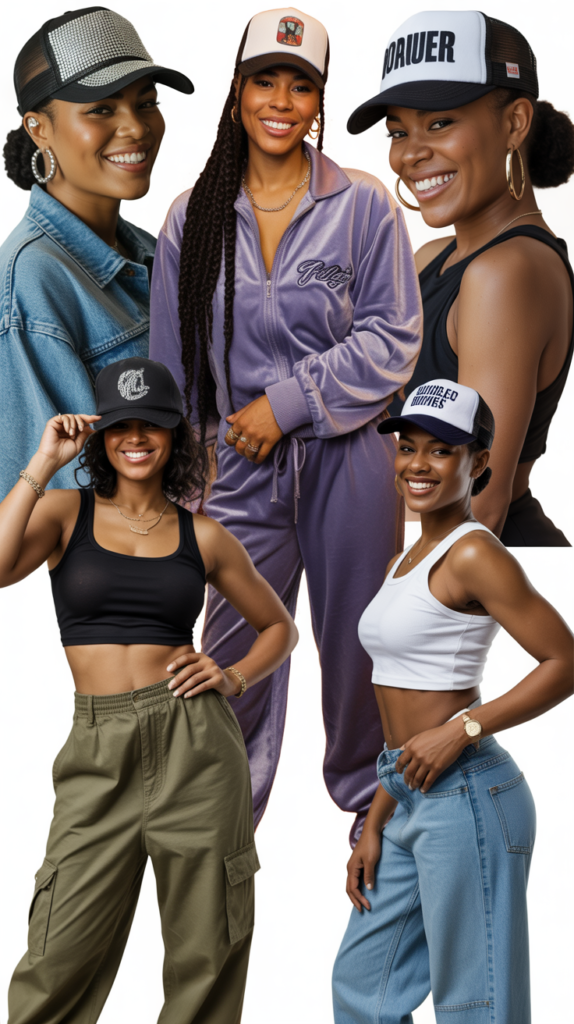
Trucker hats—mesh-backed baseball caps with foam fronts—became an unexpected fashion accessory in 2000s hip hop.
Black women styled these working-class hats with high-end outfits, creating interesting contrasts.
Unexpected Accessory:
- The hats featured everything from brand logos to ironic statements to custom designs
- Wearing them slightly tilted or backwards added an intentional casualness to otherwise polished looks
- The mesh backing kept them practical in warm weather while maintaining the hip hop aesthetic
- Pairing trucker hats with designer outfits created high-low fashion moments that felt fresh and unpredictable
- Limited edition or rare trucker hats became collectible items within hip hop fashion circles
- The trend represented hip hop’s ability to take blue-collar items and make them desirable and fashionable
- Female artists wearing trucker hats challenged the pressure to always appear perfectly polished and feminine
20. Apple Bottoms and Curve Celebration
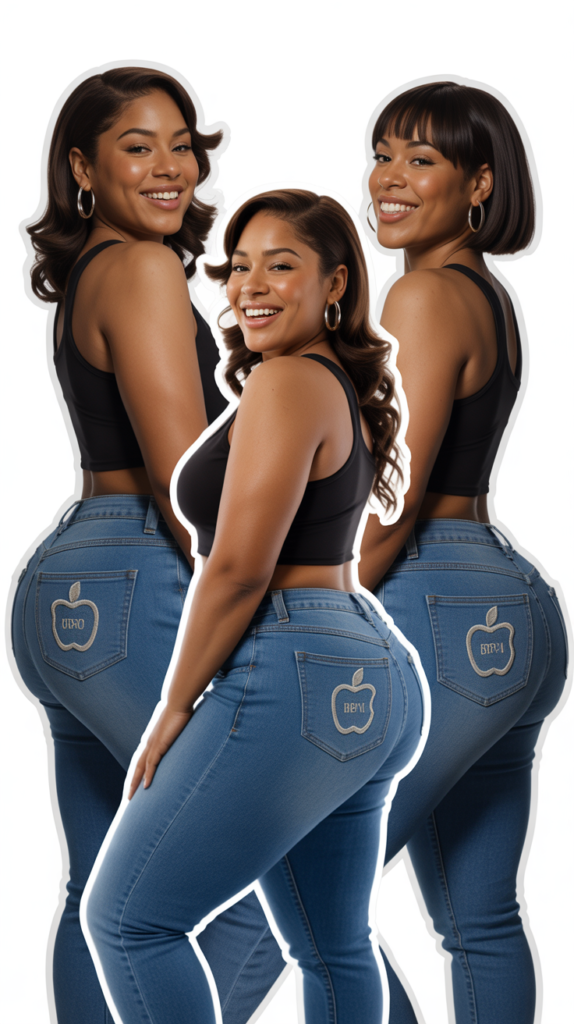
Nelly’s Apple Bottoms brand specifically designed jeans for women with curves, celebrating body types that mainstream fashion often ignored.
Black women in hip hop finally had denim that fit properly and celebrated rather than concealed their figures.
Body-Positive Design:
- The jeans featured a distinctive apple logo on the back pocket, signaling the wearer’s confidence in her curves
- Cut specifically for women with fuller hips, thighs, and backsides, preventing the dreaded waist gap
- Various rises and styles ensured that different body types could find flattering fits within the brand
- The marketing campaign featured diverse body types, challenging the ultra-thin model standard
- Apple Bottoms represented the intersection of male appreciation and female empowerment in hip hop fashion
- The brand’s success proved there was a massive market for size-inclusive, curve-celebrating fashion
- Wearing Apple Bottoms became a statement about embracing natural Black female body types with pride
21. Keyshia Cole’s Emotional Fashion
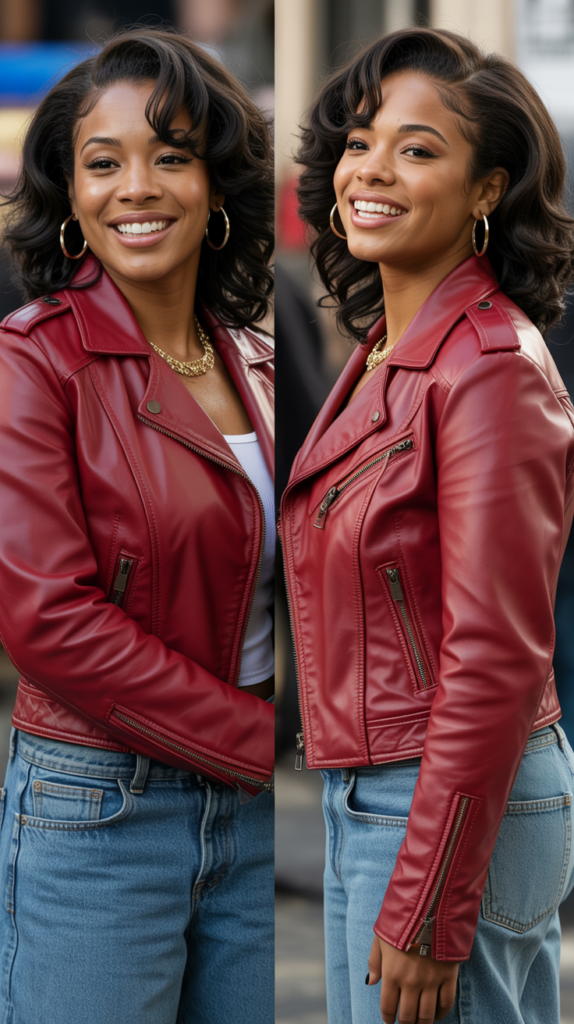
Keyshia Cole brought an emotional vulnerability to hip hop fashion that matched her musical style.
Her looks balanced street credibility with heartbreak chic, creating a relatable aesthetic for women navigating love and loss.
Signature Style:
- Red was her power color, appearing in everything from leather jackets to hair highlights to lip gloss
- She mixed tough leather pieces with soft, feminine details like ruffles or lace underneath
- Her hair—whether long weaves or shorter cuts—always appeared perfectly styled even in casual moments
- Keyshia’s fashion reflected her Oakland roots while incorporating the glamour expected of R&B/hip hop artists
- Statement jackets with bold designs or messages became her trademark outerwear choices
- Her style was accessible and replicable, making fans feel they could achieve similar looks
- The emotional honesty in her fashion choices matched the vulnerability in her music, creating a complete artistic package
22. The Von Dutch Trucker Hat Era
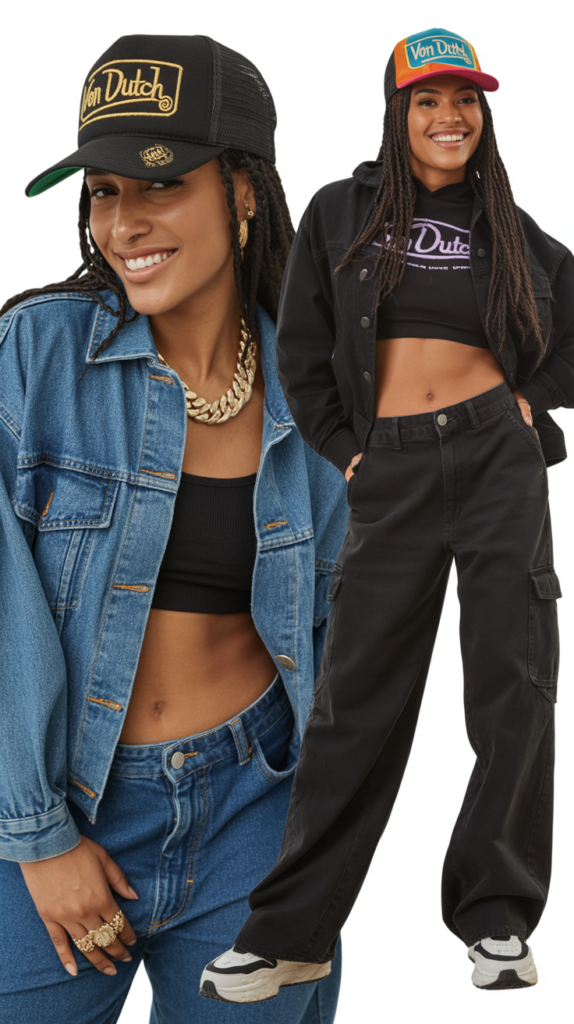
Von Dutch trucker hats became the ultimate status symbol crossover between hip hop and pop culture.
Black women in hip hop wearing these specific hats represented the genre’s expanding influence beyond traditional boundaries.
Cultural Crossover:
- The distinctive Von Dutch logo signaled awareness of broader fashion trends beyond just hip hop
- Limited availability and high price points (for what was essentially a trucker hat) created exclusivity
- Pairing Von Dutch hats with traditional hip hop outfits showed genre fluidity and cultural awareness
- The brand’s popularity among both hip hop and pop stars demonstrated the blurring of musical genre boundaries
- Customized Von Dutch hats with added rhinestones or alterations made them uniquely hip hop
- The trend represented hip hop’s influence on mainstream fashion rather than simply absorbing influences from outside
- Looking back, Von Dutch hats symbolize a specific moment when hip hop was becoming America’s dominant cultural force
23. Missy Elliott’s Adidas Addiction
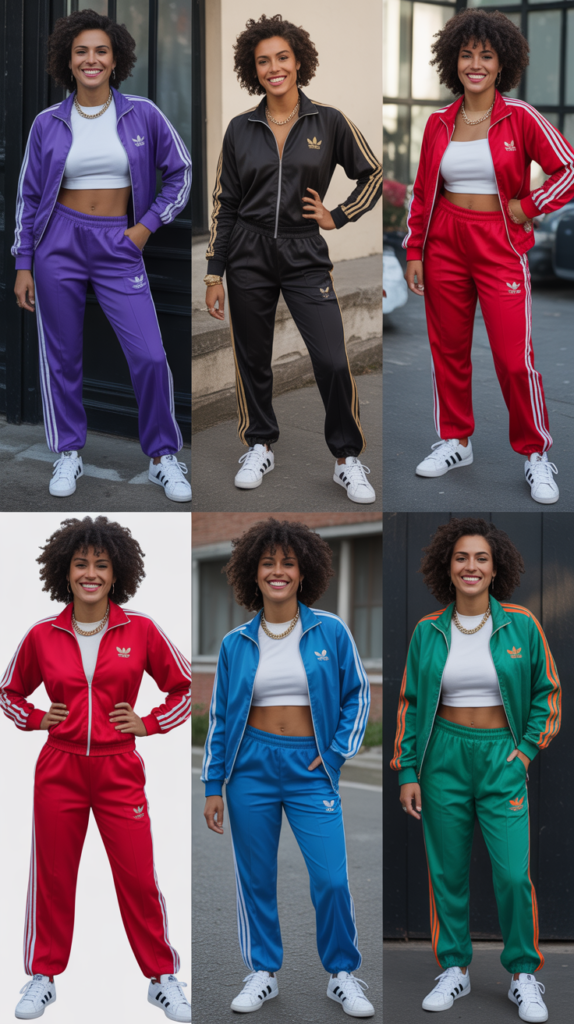
Missy Elliott’s relationship with Adidas became one of the most visible brand partnerships in hip hop.
Her consistent styling of Adidas tracksuits, sneakers, and accessories made the three stripes synonymous with her image.
Brand Loyalty:
- Custom Adidas tracksuits in unique colors and patterns appeared in nearly every public appearance and video
- She wore Adidas Superstars, Gazelles, and other classic silhouettes, helping maintain their cultural relevance
- The partnership represented authentic sponsorship based on genuine love rather than just financial arrangement
- Missy’s Adidas styling showed how one brand could be incorporated into countless different looks
- Her creative approach to wearing Adidas—from backwards visors to customized jackets—inspired fans globally
- The consistent branding helped establish Missy as a business-minded artist who understood marketing
- This loyalty contrasted with artists who constantly switched brands, making her Adidas connection more memorable and meaningful
24. The Choker Necklace Essential
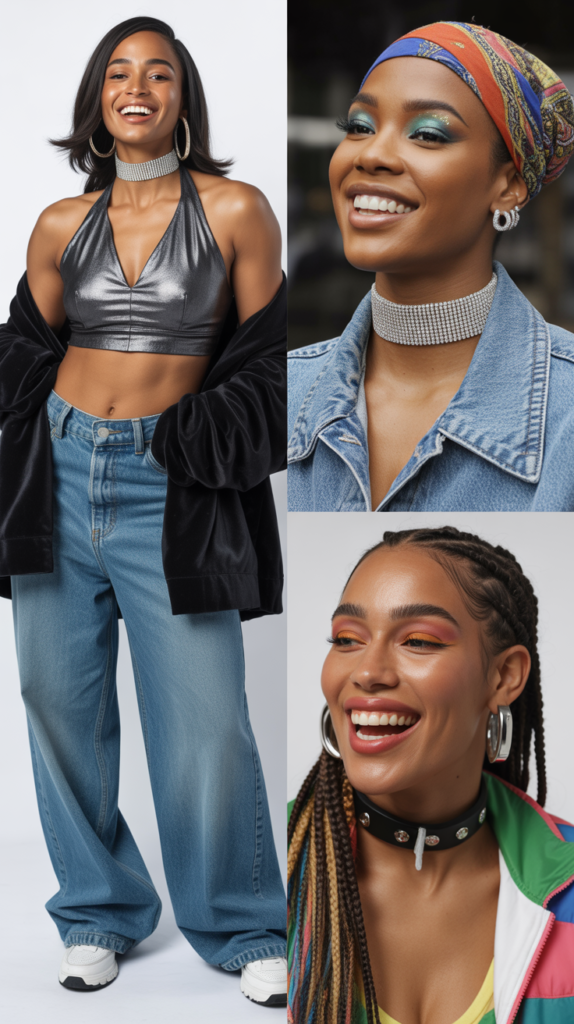
Choker necklaces in various materials and styles became non-negotiable accessories in 2000s hip hop fashion.
Black women wore everything from simple black velvet chokers to diamond-encrusted platinum versions.
Accessory Impact:
- Black velvet chokers provided affordable elegance that complemented bare shoulders and necklines
- Tattoo chokers—stretchy plastic versions—were ubiquitous and accessible to fans of all economic backgrounds
- Gold and platinum chokers with pendants merged traditional hip hop jewelry with the choker trend
- Layering multiple chokers of different widths and materials created visual depth and personal style
- The accessory drew attention to the neck and collarbones, adding elegance to simple outfits
- Chokers worked with both casual streetwear and formal gowns, proving their versatility
- The trend represented hip hop’s ability to take items from various subcultures and make them mainstream
Conclusion
The 24 Hip Hop Looks Black Women Dominated 2000s represent more than just fashion trends—they tell the story of creativity, empowerment, and cultural revolution.
From Missy Elliott’s inflatable suits to Aaliyah’s tomboy elegance, from Baby Phat’s curve celebration to the democratizing power of velour tracksuits, Black women in hip hop used fashion as their medium to challenge norms, express identity, and demand respect.
These looks proved that style could be both accessible and aspirational, that femininity could coexist with toughness, and that Black women deserved to take up space and be seen on their own terms.
The door-knocker earrings, the cargo pants, the bandana tops, and the low-rise jeans weren’t just clothing—they were statements of independence and artistry that continue to influence fashion today.
Whether you lived through the era or discovered it through throwback posts, the impact of these 24 Hip Hop Looks Black Women Dominated 2000s remains undeniable, reminding us that when Black women lead in fashion, everybody follows.
